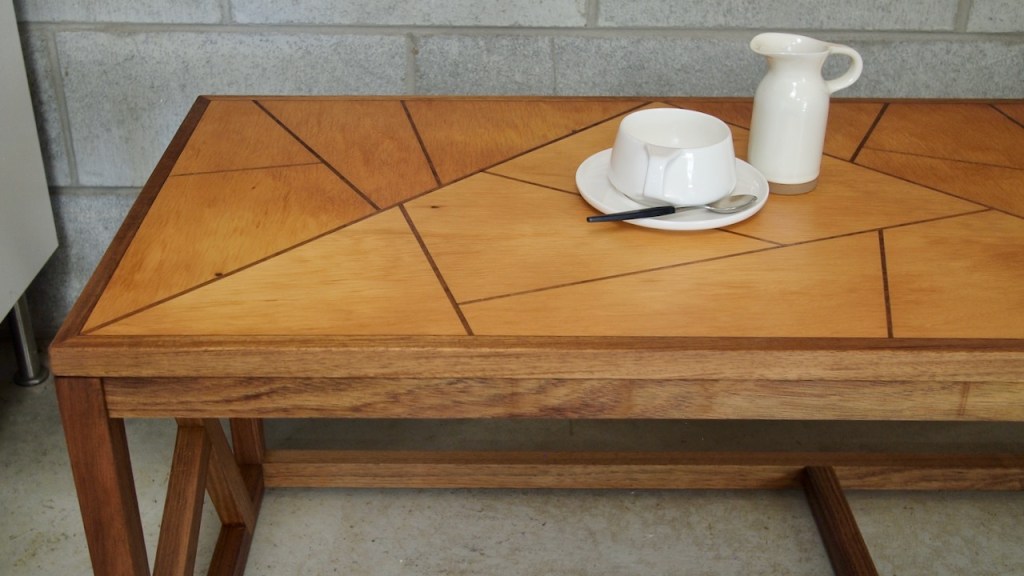
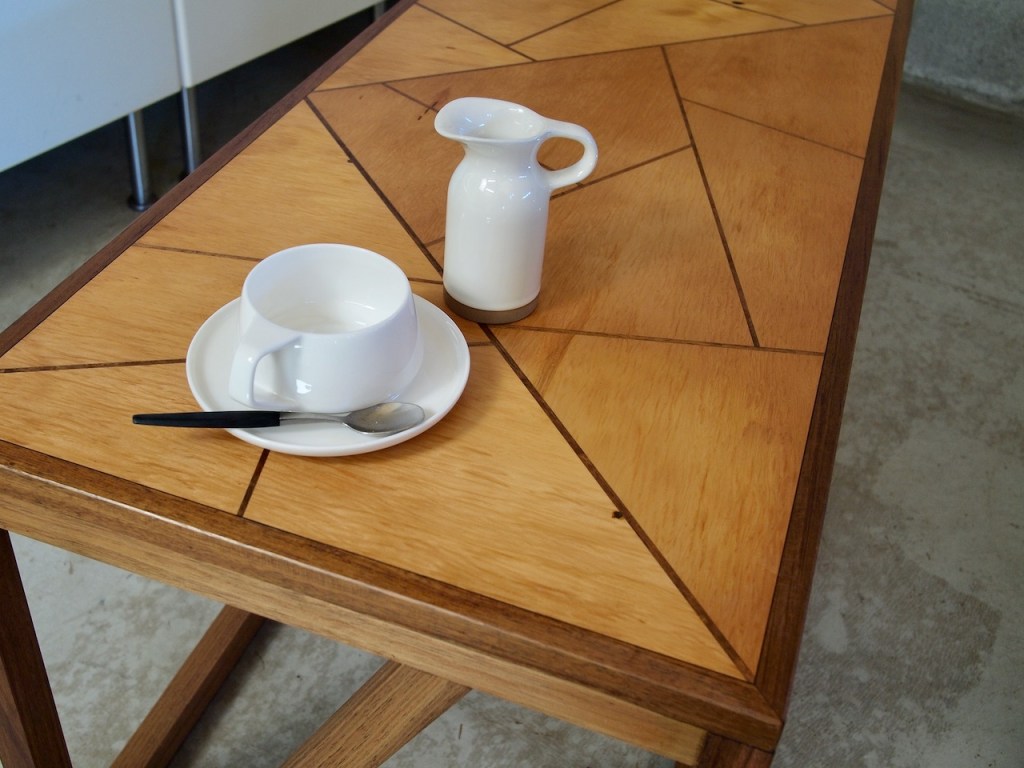
Completed Ice Ray Table. Huon Pine and Blackwood.
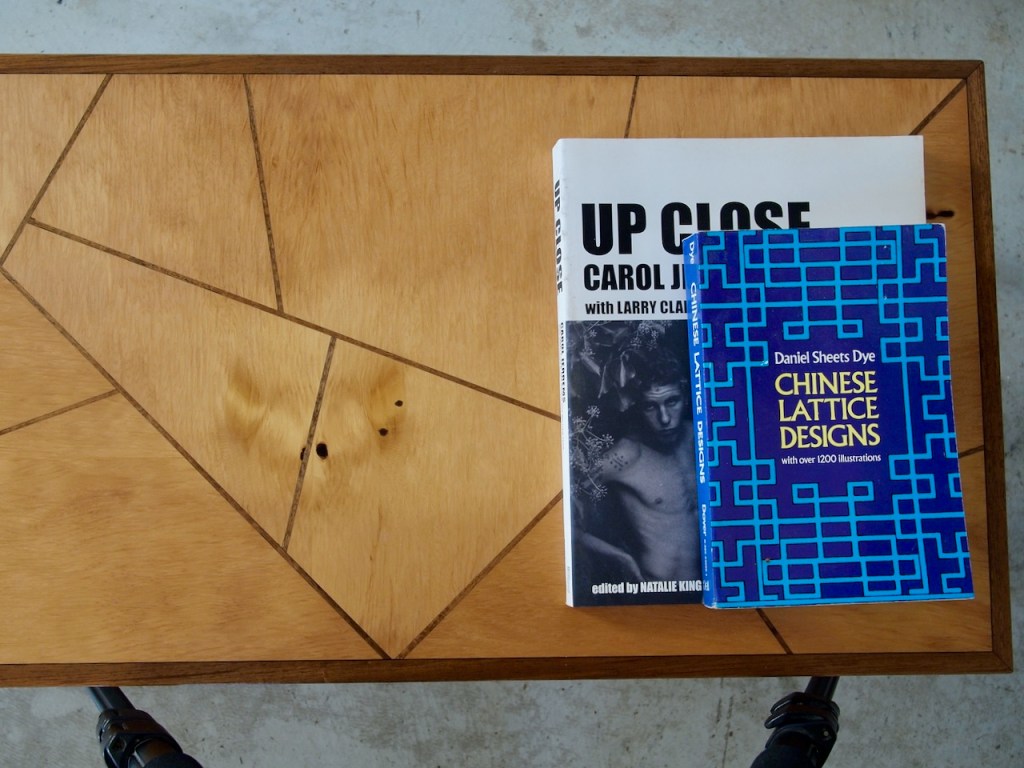
Daniel Sheets Dye spent 21 years in China in the early part of the 20thC. and collected 1200 lattice designs and divided them into various categories. ‘Ice Ray’ patterns form one category.




29 Saturday Jun 2024
Posted in Uncategorized
Completed Ice Ray Table. Huon Pine and Blackwood.
Daniel Sheets Dye spent 21 years in China in the early part of the 20thC. and collected 1200 lattice designs and divided them into various categories. ‘Ice Ray’ patterns form one category.
11 Tuesday Jun 2024
Posted in Uncategorized
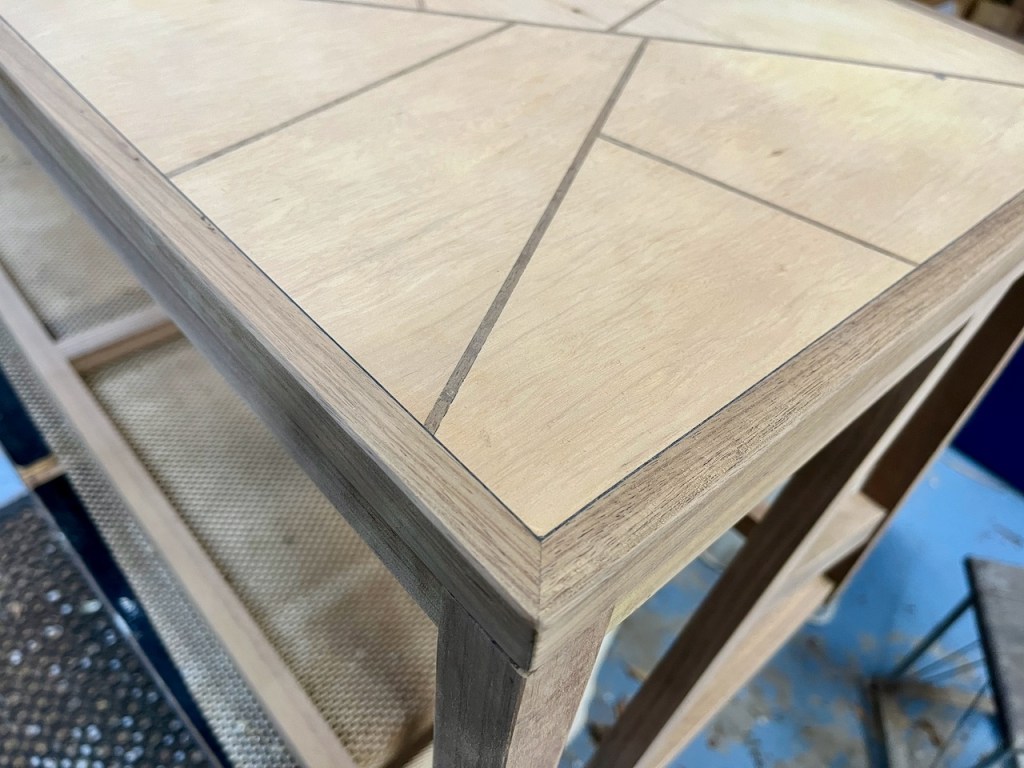
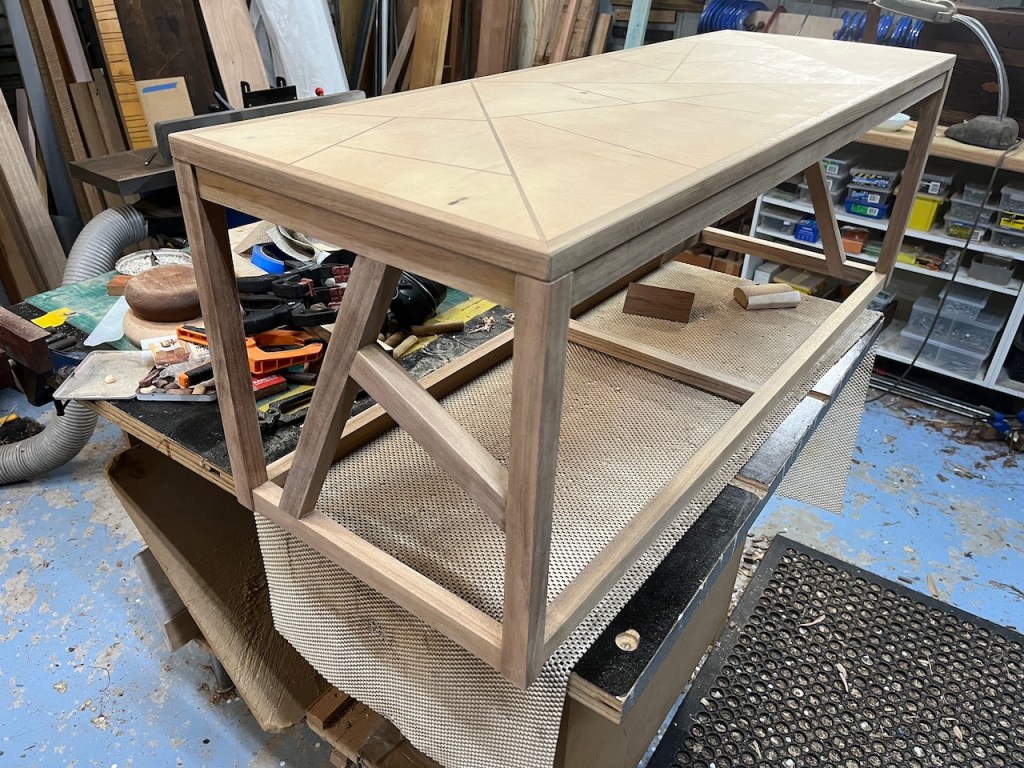
Final assembly prior to applying lacquer. Table of recycled Huon Pine and Blackwood.

22 Sunday Oct 2023
14 Friday Jul 2023
Posted in Uncategorized
Khai Liew designs high quality modern furniture, he often reworks styles from the 1950’s and the early modern period between the wars. His work is polished, balanced and often serene.
This however is very much fantasy furniture.
From its name, which refers to the novel by Charles Dodgson (writing as Lewis Carroll) ‘Alice in Wonderland’, you might expect that Liew’s design is based on a chair used in the story. While there are some references to a chair in the story they are fleeting. Alice does sit, firstly, on a mushroom and then on a velvet cushion. There is a well known illustration of Alice sitting sideways playing with a kitten, but it is an upholstered armchair. Then there are also Dodgson’s many photographs of Alice Liddell (for whom the story was written) and her older sister, Lorina, some seated, some standing. None of them provide any clue as to the source for the chairs design.
Alice has numerous friends throughout the story, the Cheshire Cat, the Mad Hatter and the March Hare, the White Rabbit, the Caterpillar and the Dormouse. The friend in the chairs name could allude to any or none of them.
Liew’s approach to fantasy furniture was never going to be outrageous. The chair, similar in design to a single seater for a private client he had made earlier, was commissioned by the gallery for its collection.
Fantasy furniture is typically the opposite of Liew’s oeuvré, it is often outlandishly colourful or outragous in its use of materials. Chairs fashioned out of stuffed animals or antlers, highly figurative carvings, excessive details and ornament all charaterise fantasy furniture.
The fantastic element of this chair is its scale. By making the chair so high and the seat so wide it seems as though this is a sculpture of a chair. The principle elements of Liew’s style are maintained but at an exaggereated scale. It is made in the style of a Danish modern chair, with a nod to the flat splat backs of Chinese armchairs. Beautifully constructed, with few and plain elements it is perfectly proportioned. Stopping the splats and raising the back arch give the chair an airy spaciousness. For a child this is chair to play on, for Liew it is a play on a chair.
Mad Hatter: “Have you guessed the riddle yet?”
Alice: “No, I give up. What’s the answer?”
Mad Hatter: “I haven’t the slightest idea.”
Photographs by me at the Art Gallery of South Australia.


04 Tuesday Jul 2023
Posted in Uncategorized
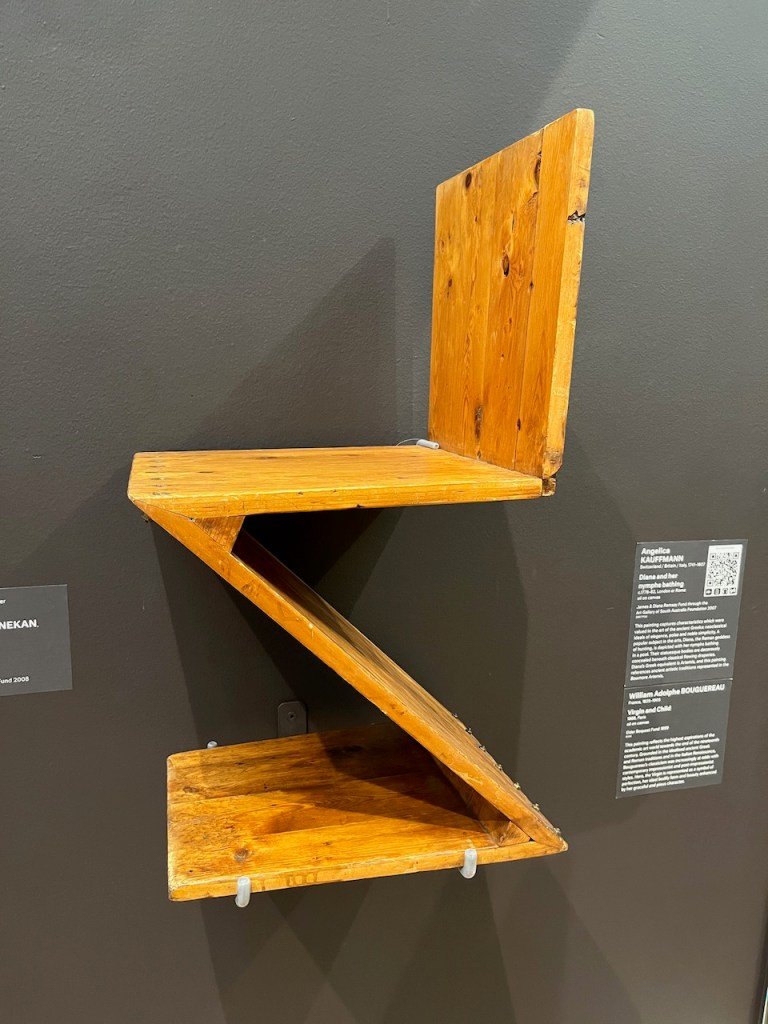
Rietveld was largely a failure as a furniture designer. Rietvelds aspiring modernity was never realised in terms of furniture, the reason why his designs are revered is because of their look, not their function. By adhering to the principles of De Stijl, in english ‘the style,’ he left questions about function, structure and ergonomics to one side in favour of appearance.
When his patron Truus Schröder-Schräder remarked that the legs of his red blue chair were always catching her ankles, he remarked that, “they weren’t designed to catch the ankles of people like you.” De Stilj were on a reformist mission, ankles didn’t matter.
I can see the appeal for Rietveld to design the Zig Zag chair. Marcel Breuer had designed the Cesca chair a few years earlier using the strength of bicycle tubing to create a metal framed cantilvered chair. Breuer thus achieved two things, aesthetically and literally the user was supported by industrial production.
Reitvelds attempt to make a cantilevered chair in wood is a noble effort. Today modern production methods and glues are able to produce a chair with the same shape much more easily.
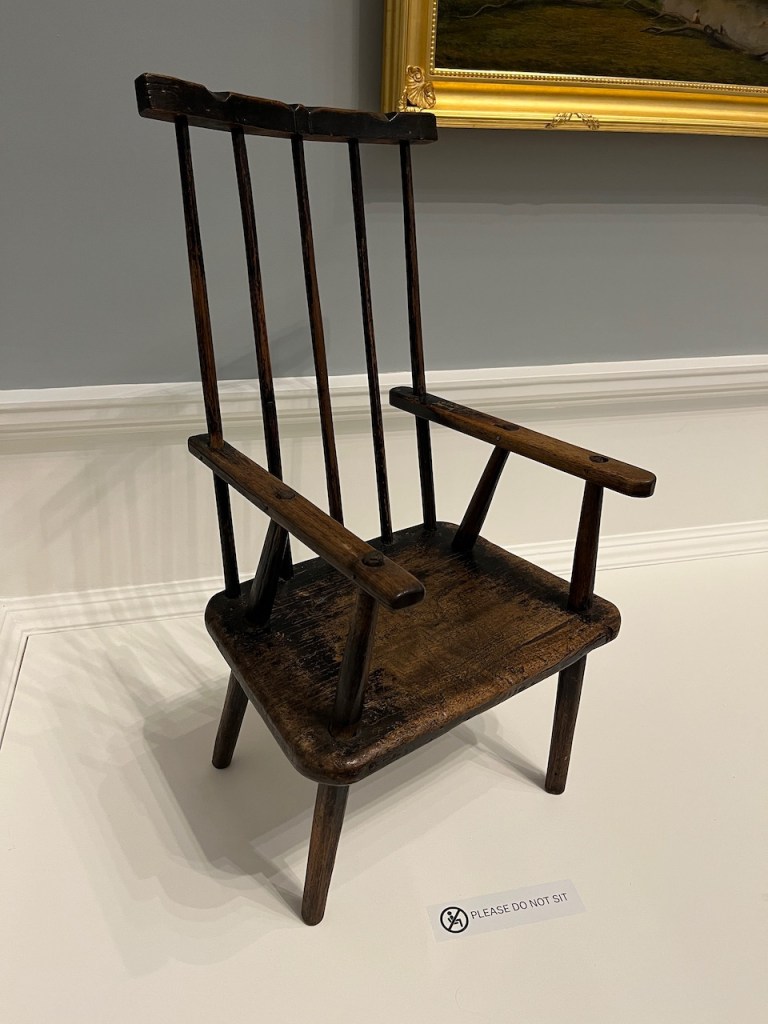
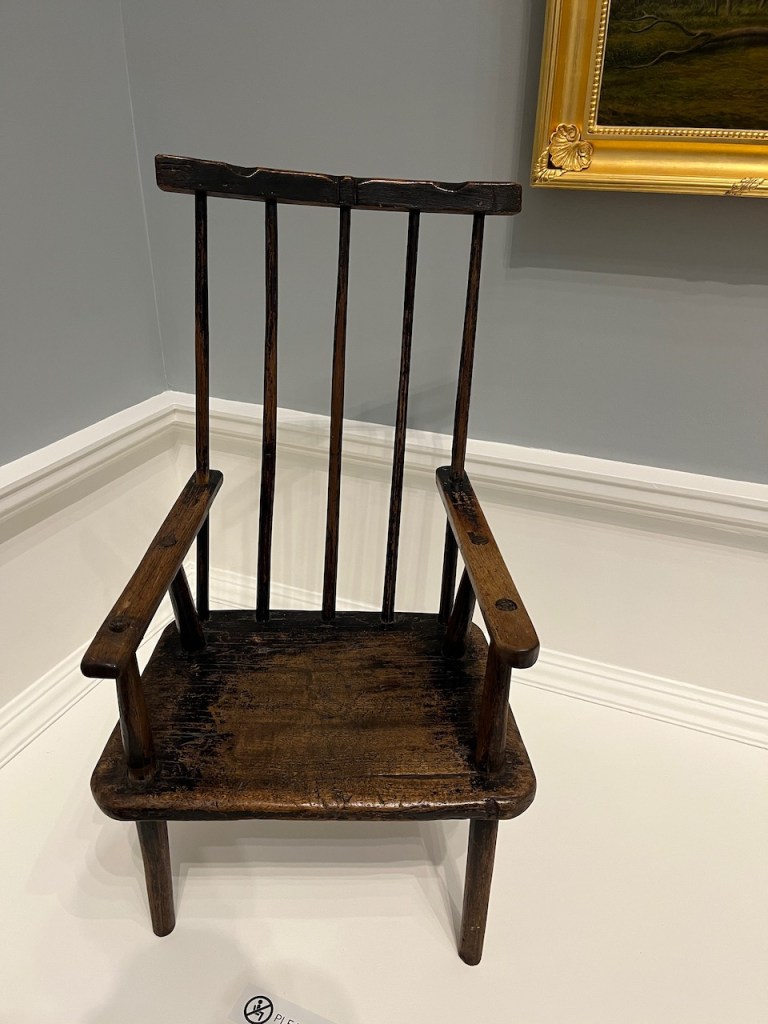
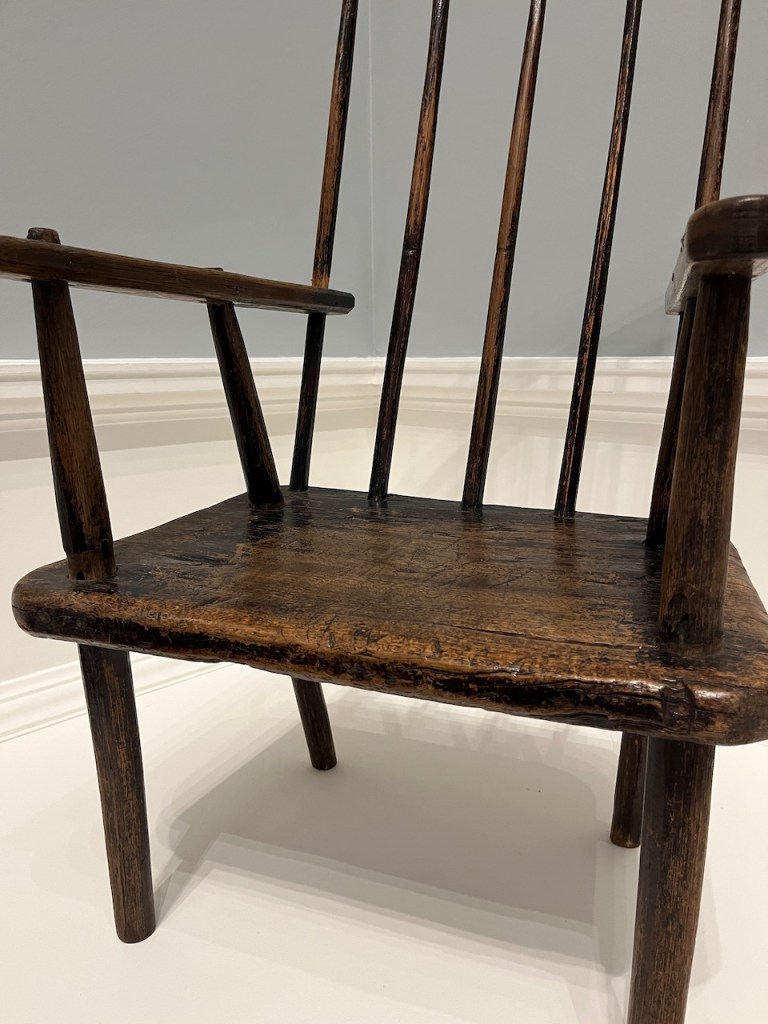
Jimmy Possum, legend has it, was a chair bodger who lived in a hollowed out tree near Deloraine in Tasmania. He had the simplest of tools and a fair supply of the local blackwood (Acacia Melonoxylon). His chairs were a simple windsor style design that could be produced without nails or screws. It is estimated that he produced several hundred chairs, many of which are in museums across the country.
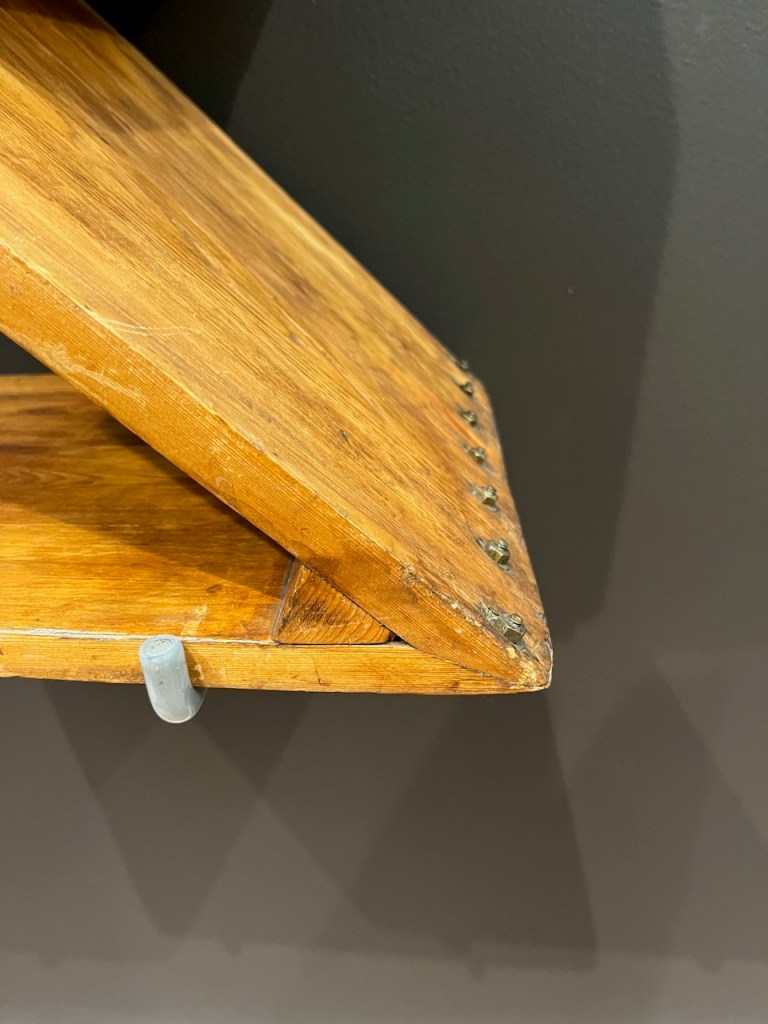
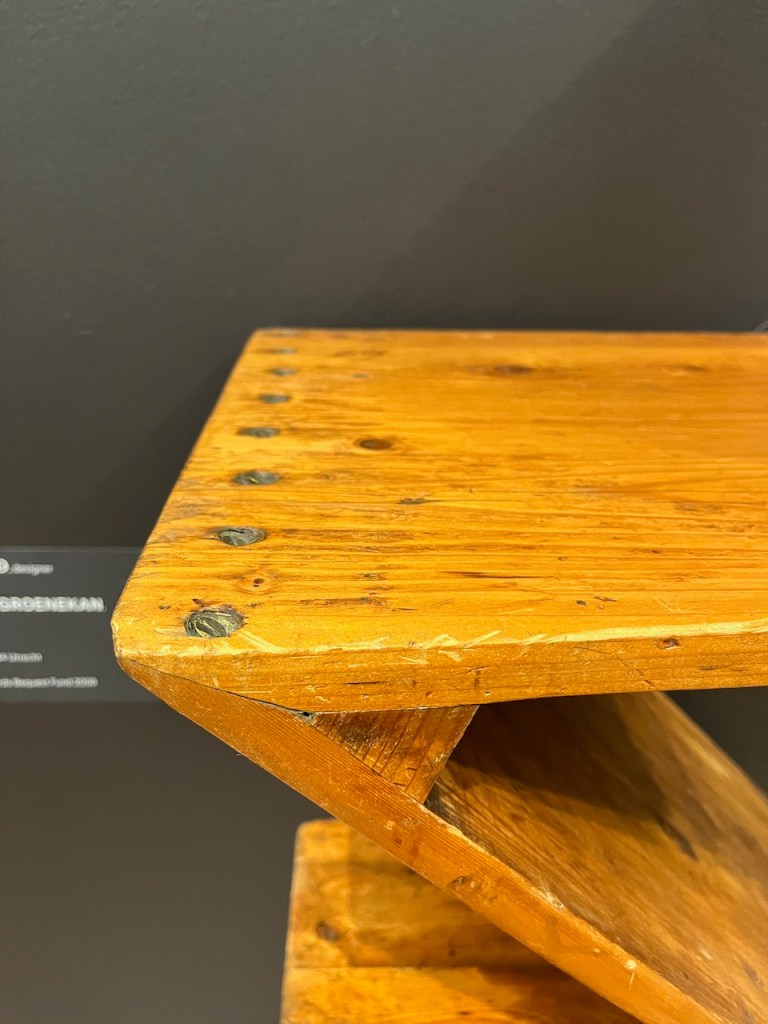
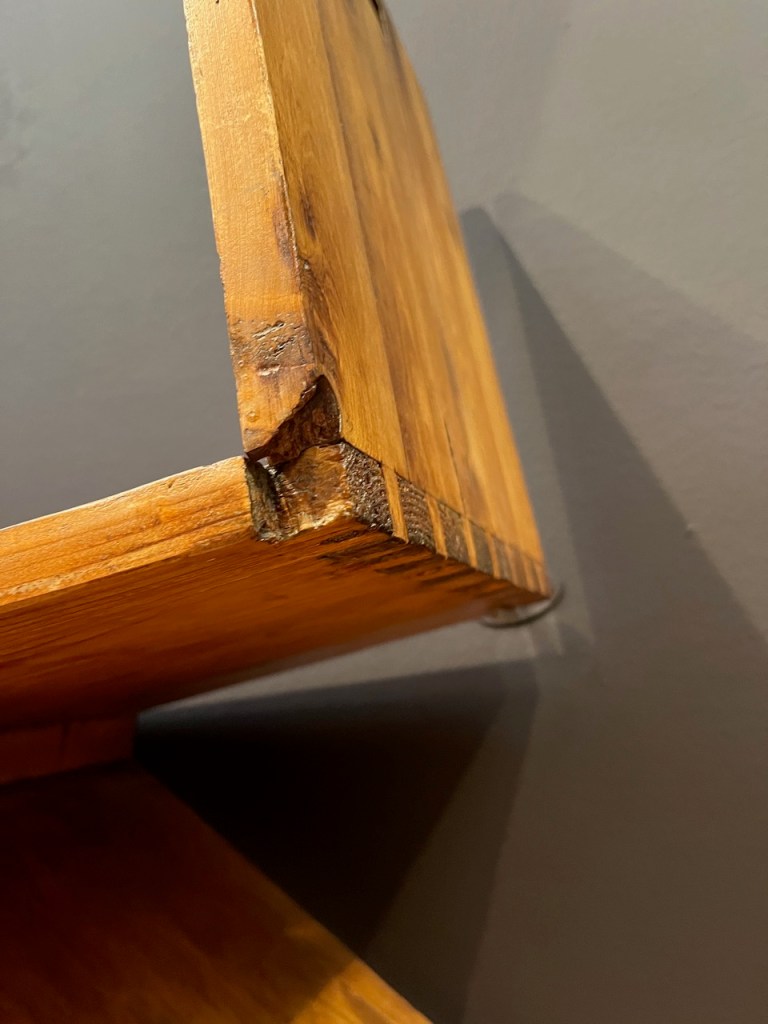
A significant difference between the two chairs is the way they approach the weight of the user. Rietveld’s chair uses glue, screws, bolts and wedges to try to mitigate the stress placed on the chair by the user, so that the chair can resist the weight of the body and not collapse.
Jimmy Possum’s chair uses the weight of the user to strengthen the chair. The four angled and tapered legs go up through to the armrests, the weight of the user stiffens the chair as it is used. The heavier the user the more the chair stiffens. Jimmy Possum, a few decades before Rietveld, with a minimum of resources, produced a chair which married structure and ergonomics.
All photos taken by me at the Art Gallery of South Australia.


03 Monday Jul 2023
Posted in Uncategorized
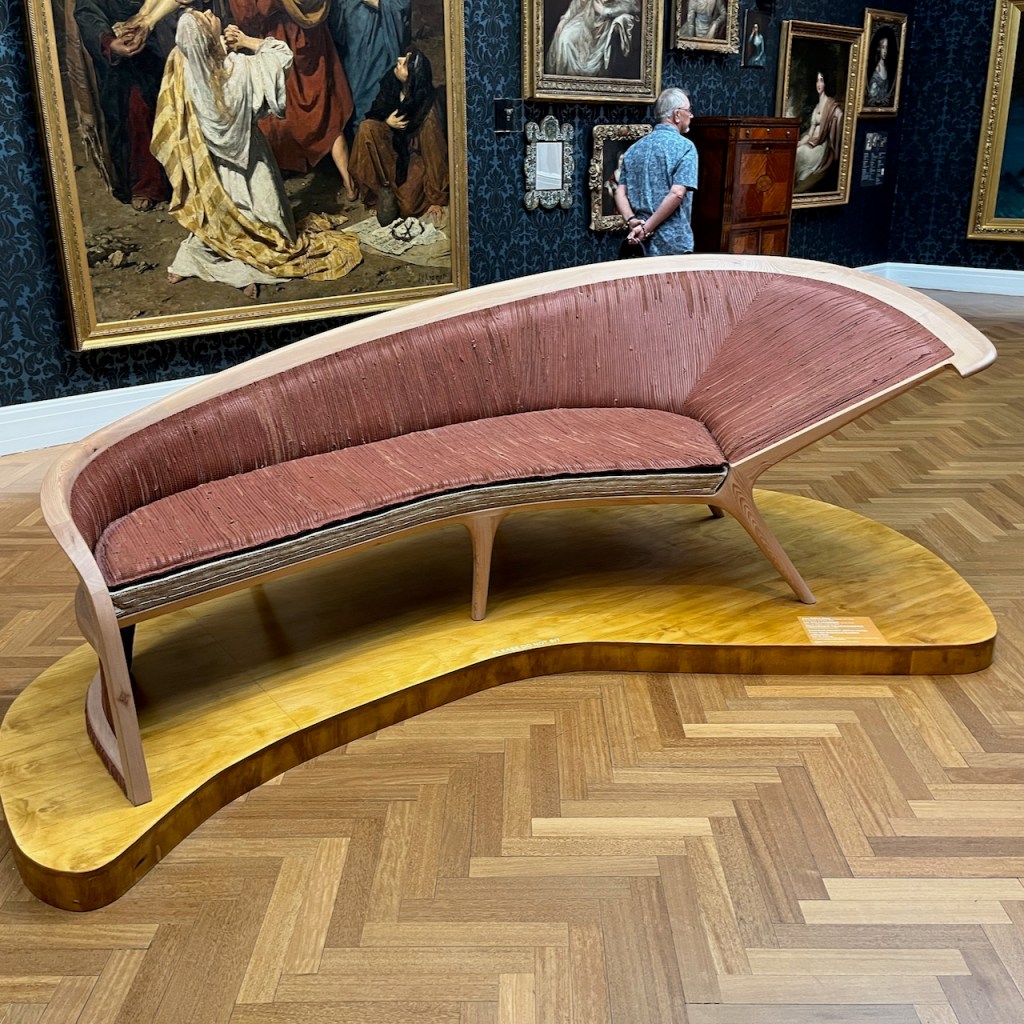
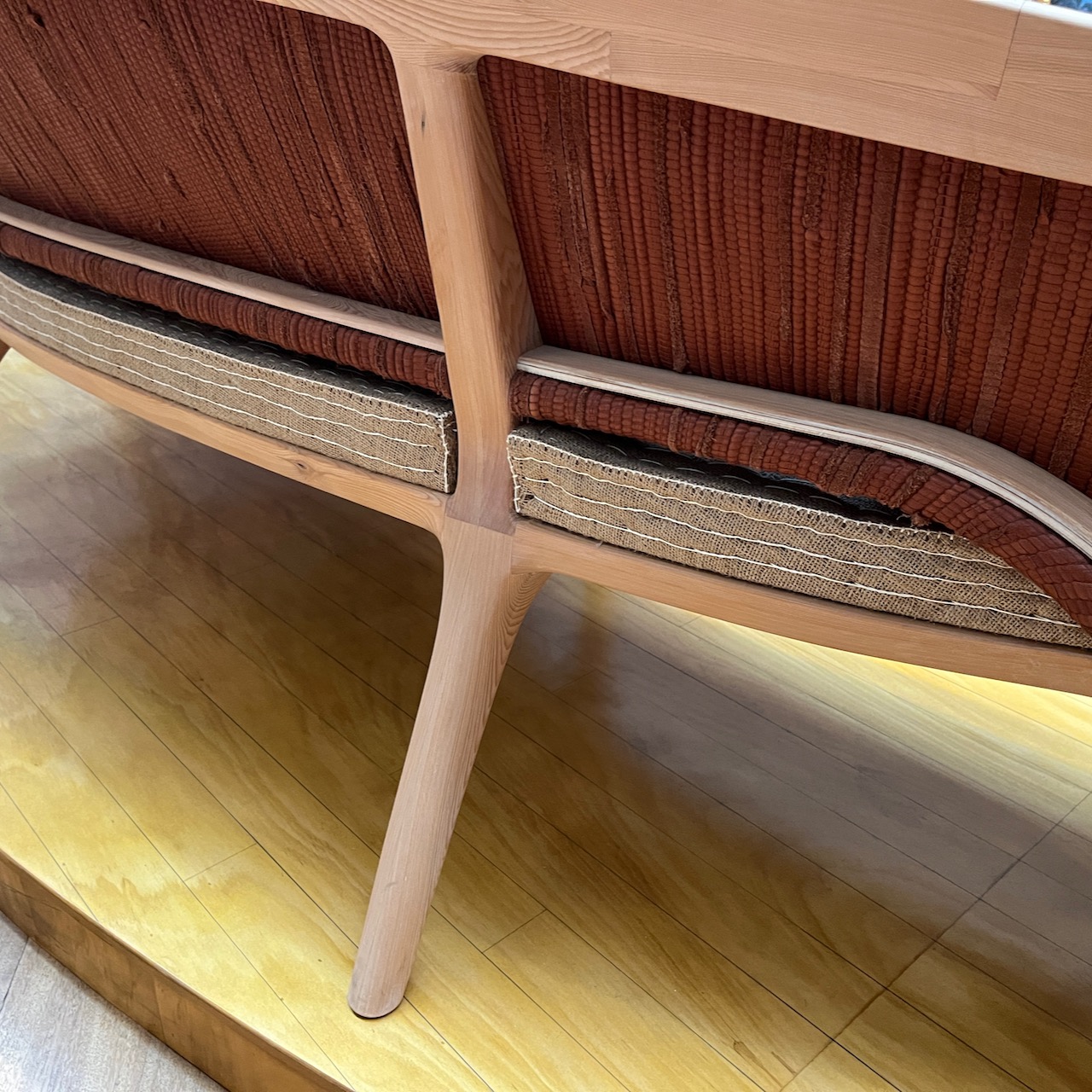
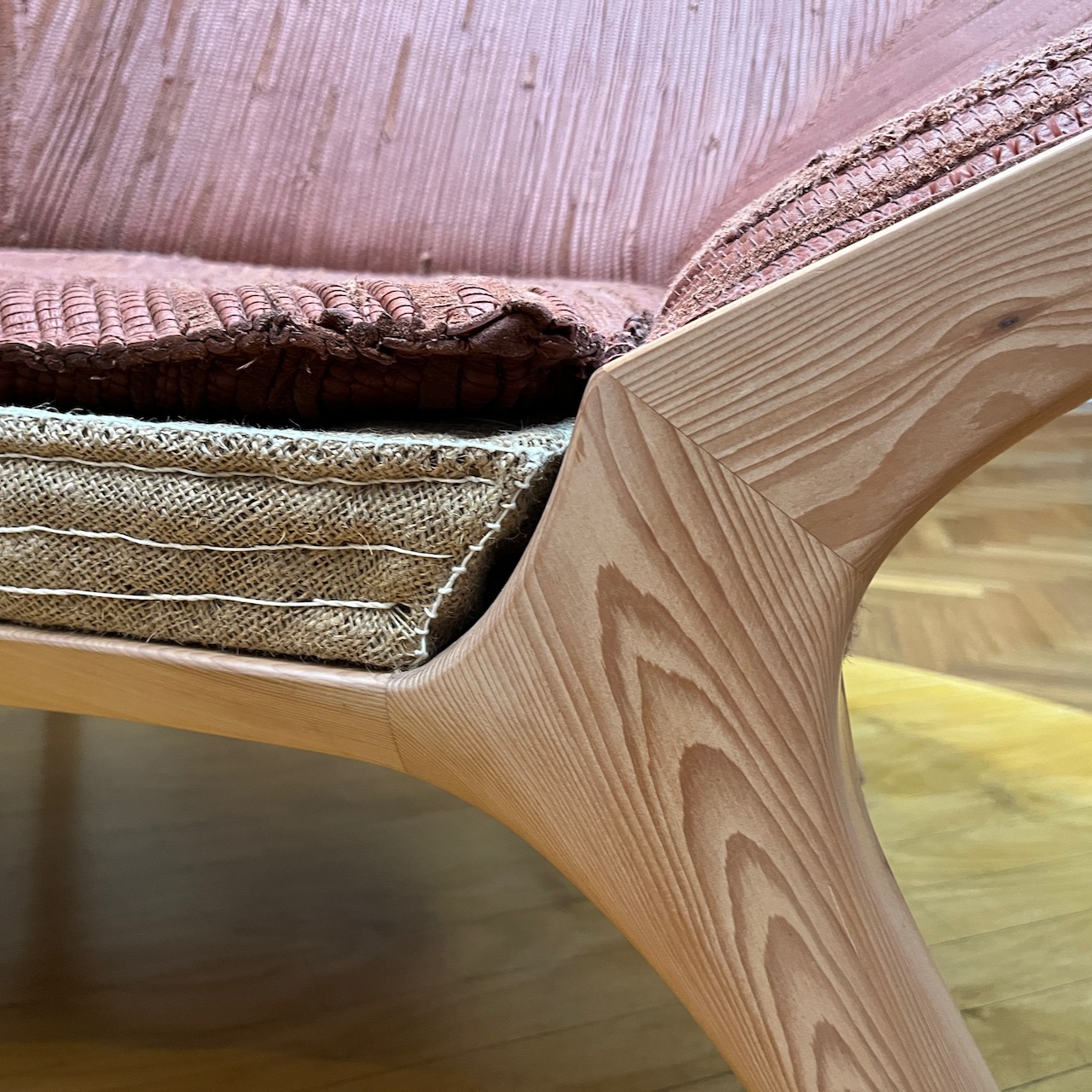
I saw this last February at the AGSA.
I entered a few terms into ChatGPT to see how it would write a review, I’m happy enough with that.
The craftsmanship of this upholstered sofa is exceptional, blending the sensuousness of art nouveau, the simplicity of early modernism, and the rawness of art brut. Its lineage speaks to a rich history of artistic movements, each leaving their imprint on its design. The appeal lies in its ability to bridge the past and the present, capturing multiple artistic periods and offering a unique and captivating aesthetic both the traditional and the unconventional. It effortlessly merges various artistic sensibilities into a cohesive whole.
Pictures by taken by me at the Art Gallery of South Australia.
01 Thursday Dec 2022
Posted in Uncategorized
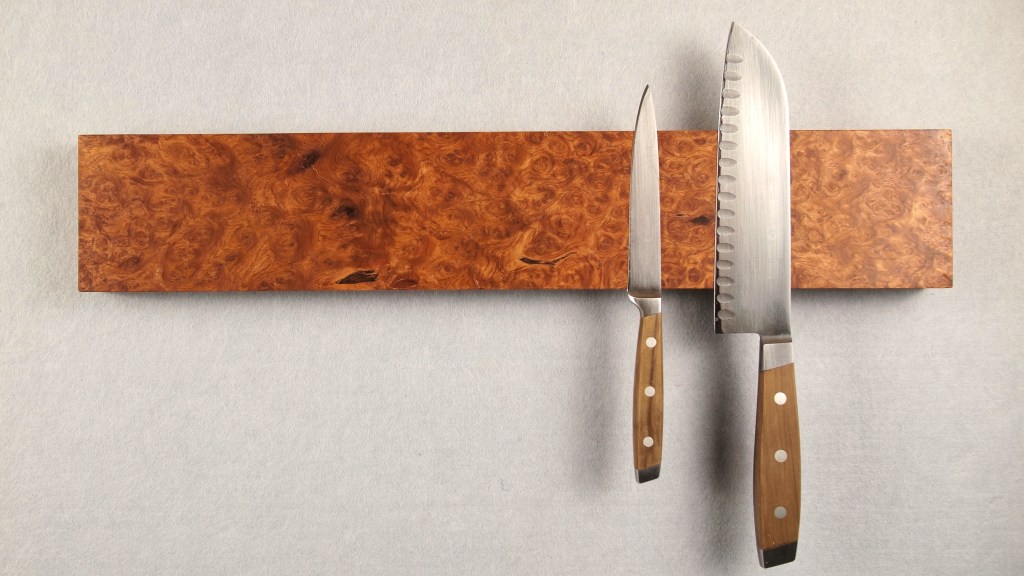
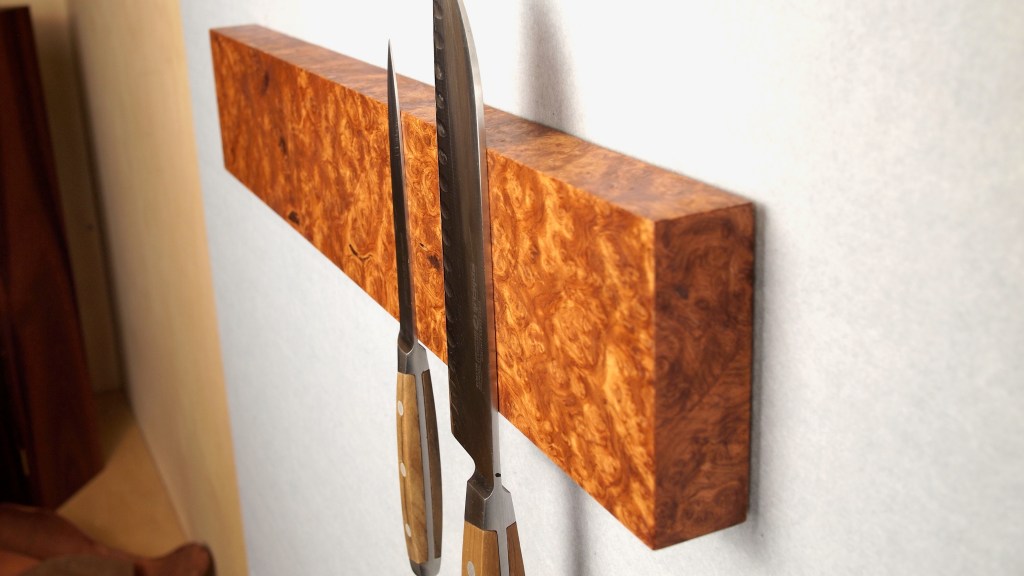
Very large knife block for those that have knives with 25cm blades.

17 Sunday Jul 2022
Posted in Uncategorized
Lucky to get a few sheets of this lovely veneer from a retiring woodworker. Amboyna burl is among the world’s rarest and most expensive veneers—holding the distinction of being the original wood used on Rolls Royce dashboards. Leafs are small in dimension due to the small size of the burl. Deep yellow-orange to red, Amboyna burl has an unsurpassed depth and beauty.
30 Tuesday Nov 2021
Posted in Uncategorized

11 Monday Jan 2021
Posted in Uncategorized

Leslie and I were at the University of Tasmania together for a few years. He was always lively, enthusiastic, and a diligent worker. Since he passed away in January 2006, not much has been written or said about his work. I don’t believe his Shoreline lounge, probably his most reproducible design, is still in production.
First designed in 1984, the design was registered by Leslie in May 1987 and later produced by arrangement with James Bradley Pty Ltd. in Launceston, Tasmania. (Bradley also produced Marc Newson’s early ‘Wood Chair,’ around the same time.)
The drawing above shows changes made to the design 10 years later, a subtle change in two curves. The design is a reduction of the sun lounger, a popular piece of outdoor furniture, and relies on the strength of laminated pine to achieve fluidity and simplicity. The photo below is from the auction house Shapiro, I don’t know the date of the auction but the chair was expected to reach between $3,000 and $5,000. The drawing above is from the Powerhouse Museum of Applied Arts and Sciences, Sydney.
It is a beautiful design that reflects the seaside influence that Leslie grew up with in Perth, WA.




 Kangaroo Sofa